
Guide · 9 minute read · Checked October 2026
Cleaning vs Sanitising vs Disinfecting: What Your Business Needs
Sanitising vs disinfecting is not a question of which is stronger, but of which job you need done. Cleaning lifts dirt, grease and a large share of germs using detergent and water. Sanitising brings germs down to a safe level, mainly where food is prepared. Disinfecting relies on a product made to kill germs on hard, non-food surfaces, and it needs a clean surface to work on. This guide explains the difference in plain terms, why contact time on the label matters more than the brand, whether disinfectant fogging is worth paying for, and what a sensible routine looks like for an office, a food business, a gym or a clinic. It is written for business owners and managers, not scientists. More guides for Melbourne workplaces are on our guides and checklists page.
Three different jobs
What is the real difference in sanitising vs disinfecting and cleaning?
Cleaning physically removes dirt, grease and many germs. Sanitising reduces the germs left on a surface to a level considered safe, usually on surfaces that touch food. Disinfecting uses a disinfectant to kill most germs on hard surfaces. They build on each other: sanitising and disinfecting only work properly on a clean surface.
Cleaning
Detergent, water and wiping or scrubbing lift dirt and grease away, taking many germs with them.
- Where
- Every surface, every visit
- Products
- Neutral or general detergents
- Result
- Visibly clean surface
Sanitising
Brings remaining germs down to a safe level. In food businesses, often done with heat or a food-safe sanitiser.
- Where
- Benches, boards, utensils
- Products
- Food-safe sanitisers, hot water
- Result
- Safe for food contact
Disinfecting
A disinfectant, left wet for the time on its label, kills most germs on hard, non-food surfaces.
- Where
- Touch points, bathrooms, clinics
- Products
- Disinfectants used to label
- Result
- Fewer germs on key surfaces
The most common mistake is skipping the first step. Dirt, grease and body oils form a layer that protects germs from the product. Spraying disinfectant onto a grubby surface and wiping it straight off smells clean, but it achieves much less than people think. In most workplaces, thorough cleaning with detergent removes the bulk of the problem on its own.
The words also get mixed up on labels and in advertising. Some products clean and disinfect in one, which can work on lightly soiled surfaces if you follow the directions. Hand sanitiser is a different thing again, meant for skin, not surfaces. Disinfectants sold in Australia with claims about particular germs fall under the Therapeutic Goods Administration's rules, so the label directions carry real weight.
Dwell times
Why does contact time matter so much?
Contact time (the trade often calls it dwell time) is the length of time a product needs to sit, still wet, before it achieves what the label claims. Wipe it off sooner and the product may not work as claimed. Times vary from under a minute to ten minutes or more, depending on the product and the germ.
- CleanRemove visible dirt with detergent and water first.
- ApplyUse the disinfectant at the strength on the label.
- WaitKeep the surface wet for the full contact time.
- Rinse if toldSome products need rinsing, especially near food.
Contact time is where many good intentions fall down. A spray-and-wipe routine that takes five seconds per surface cannot deliver a product that needs five minutes. Where a longer contact time matters, cleaners either apply enough product to keep the surface wet for the full time, or choose a product with a shorter contact time suited to the job.
Dilution matters too. Concentrates mixed too weak will not work as claimed; mixed too strong, they waste money, can damage surfaces and can irritate skin and airways. Measured dispensers and clearly labelled bottles are small things that make a big difference.
Finally, not every surface tolerates every product. Some disinfectants damage screens, rubber, timber finishes or natural stone. Checking compatibility before rolling a product out across a building saves expensive mistakes.
Does fogging work?
Is disinfectant fogging worth paying for?
For routine workplace hygiene, usually not. Australian government health advice notes that disinfectant fogging is not recommended by its infection control experts for COVID-19, because it may not put enough disinfectant on surfaces to work, can expose people to chemicals, and needs time for the mist to settle before a room can be used.
The Department of Health's guidance on routine environmental cleaning and disinfection in the community makes the point plainly: technologies such as fogging do not replace manual cleaning and disinfection, and a disinfectant should be applied to a clean surface. Fogging looks impressive, but a fine mist settling on dirty surfaces does little that a proper wipe would not do better.
There are specialised situations where misting or fogging systems are used by trained operators with suitable products, protective equipment and a plan to clear the space. Those are exceptions, not a substitute for good cleaning. If someone offers to fog your office as a regular service, ask what problem it solves that thorough cleaning and targeted disinfection of touch points do not.
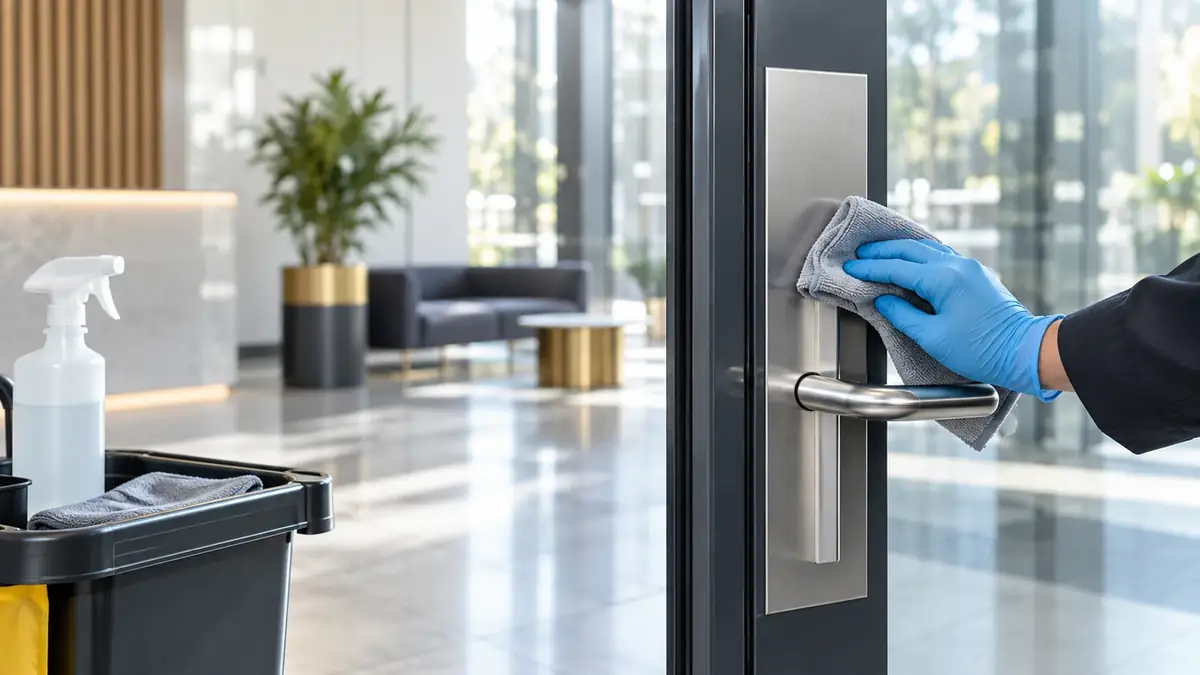
Reading the label
What should you check on a disinfectant label before using it?
Check four things on a disinfectant label before using it: what it claims to work against, how to dilute it, how long the surface must stay wet, and which surfaces it suits or must not touch. Then check the safety information for gloves, ventilation and first aid.
Claims tell you what the product has been shown to do. A product that is fine for general bathroom use may make no claims about the germs that matter in a clinic or during a gastro outbreak. If a particular germ is the concern, look for a product whose label names it and follow the directions for that use.
Directions for use cover dilution and contact time. Ready-to-use sprays are simple; concentrates need measuring, and a product mixed by guesswork is a product used wrongly. Some labels give different contact times for different germs, so the longest relevant time is the one to follow.
Surface warnings are easy to skip and expensive to ignore. Bleach-based products can discolour fabrics and pit some metals. Some quaternary ammonium products leave a residue on glass and screens. Acidic cleaners etch marble and limestone. The label and the safety data sheet say what to avoid.
Finally, the safety data sheet sets out protective equipment, storage and what to do if the product is splashed on skin or in the eyes. Businesses using cleaning chemicals should keep these sheets where staff can reach them, and never decant products into unlabelled bottles.
Common mistakes
Which hygiene mistakes do businesses make most often?
The mistakes we see most are disinfecting dirty surfaces, wiping products off too soon, using the same cloth everywhere, mixing chemicals, and spending on fogging or strong products while basic cleaning of kitchens and bathrooms slips. Each is easy to fix once it is noticed.
Using one cloth for everything spreads germs rather than removing them. A cloth that wipes a toilet and then a kitchen bench undoes the effort put into both. Colour-coded cloths, with one colour for bathrooms, another for kitchens and another for general areas, are a cheap and effective habit that any workplace can adopt.
Mixing chemicals is dangerous, not just wasteful. Bleach mixed with ammonia-based cleaners or with acids can release harmful gases. Products should be used one at a time, as labelled, with surfaces rinsed between them if the label says so.
Over-reliance on strong products is another trap. Harsh disinfectants used everywhere, every day, can damage surfaces, irritate staff and still miss the real problem if the kitchen and bathrooms are not being cleaned properly. Getting the basics right first almost always does more for hygiene than stronger chemicals.
Programs
What hygiene routine does each type of business need?
Most offices need thorough daily cleaning plus targeted disinfection of shared touch points. Food businesses need cleaning and sanitising of food-contact surfaces as part of their food safety program. Gyms and clinics need more frequent disinfection of shared equipment and treatment surfaces, alongside documented routines.
For an office, the priorities are simple: clean kitchens and bathrooms properly every visit, and disinfect the things many hands touch, such as door handles, lift buttons, taps, fridge handles, shared desks and meeting-room tables. Walls, ceilings, carpets and personal desks do not need disinfecting in normal times. During a gastro or flu outbreak among staff, touch-point disinfection can be stepped up for a few weeks and then eased back.
Cafes, restaurants and food manufacturers work under food safety rules. Food-contact surfaces, utensils and equipment are cleaned and then sanitised, often with heat or a food-safe sanitiser, and the routine is written into the business's food safety program. Disinfectants not meant for food contact have no place on a chopping board.
Gyms have lots of shared equipment touched by sweaty hands, so wipe stations for members plus a thorough nightly clean and disinfection of benches, handles and mats make sense. Clinics and allied health rooms need cleaning and disinfection of treatment surfaces between patients, and a documented routine the practice can show when asked.
Whatever the setting, the most useful question is which surfaces are touched by many people or near food, and how often. Put the effort there, and let ordinary cleaning handle the rest. If you would like help setting that up, our sanitisation and disinfection service plans routines around your site, products and hours.
Questions
What do managers ask about sanitising and disinfecting?
Fogging, how often to disinfect, and which products to buy: here is what we tell clients.