
For property and facility managers
Commercial Property and Facility Cleaning
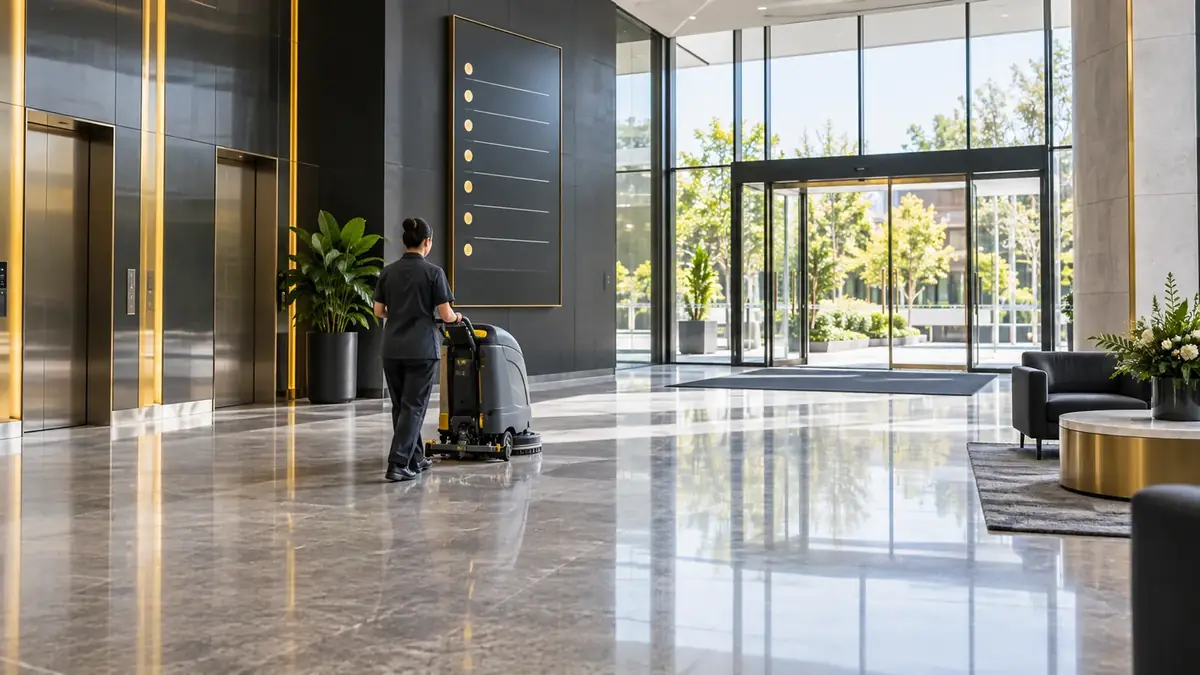
Commercial property cleaning is the cleaning of the parts of a building that the owner or manager is responsible for: entries, lifts, stairwells, shared bathrooms, car parks, loading areas and grounds, plus vacant or occupied tenancies where the lease puts them in your hands. We look after single buildings and small portfolios across Melbourne, with one scope, one point of contact and one monthly report covering every address. If you manage a mix of property types, the full list of sectors on our books shows how the method changes from site to site.
Portfolio
Can one facility cleaning program cover several buildings?
Yes. A single facility cleaning program can cover every building you manage, with a separate schedule for each address but the same checklist format, the same reporting and one person to call. Each site keeps its own frequencies and hours; the paperwork and the standard stay consistent.
- OfficeMulti-tenant officeFoyer, lifts, floor bathrooms and kitchens on shared levels, cleaned after hours with a daytime check of the entry.
- RetailStrip and neighbourhood centresWalkways, amenities, bin rooms and car parks, with early starts before shops open.
- IndustrialBusiness parks and estatesShared amenities blocks, site offices, driveways and loading aprons on a weekly or fortnightly cycle.
- Mixed useShops below, offices aboveSeparate entries and rules for each use, cleaned on one visit where access allows.
Managers who look after five or ten buildings usually inherited a different cleaner at each one. That means five invoices in five formats, five sets of keys held by people they have never met, and no easy way to tell whether one building is being cleaned to the same level as the next. Pulling them under one provider does not have to mean one identical scope. It means one standard for how the work is written down, checked and reported.
We start by walking every building with you or the site contact and writing a schedule for each: which areas, how often, at what time, and who inside the building can grant access. A four-level office with a busy foyer might need daily common-area cleaning, while a small industrial estate with six units might need a weekly visit to the shared amenities and a monthly sweep of the driveway. Both sit on the same register, so you can see the whole portfolio on a single page.
Buildings can be added or removed as your mandate changes. When you pick up a new property, we walk it within the week and send a schedule you can approve before the first clean. When a building is sold, its schedule ends at the notice date in your agreement, without affecting the rest.
Common areas and tenancies
What is the difference between common area and tenancy cleaning?
Common area cleaning covers the spaces every occupant shares and the owner controls, so it is usually arranged by the building manager. Tenancy cleaning covers the space inside a lease line, which the tenant normally arranges and pays for, unless the lease says otherwise or the tenancy is vacant.
Common areas
Usually arranged by the manager- Entry foyers, lobbies and directory boards
- Lifts, lift lobbies and stairwells
- Shared bathrooms and end-of-trip facilities
- Car parks, ramps, bin rooms and loading docks
- External paths, forecourts and building glass at ground level
Tenancies
Usually arranged by the tenant- Offices, shops and warehouse space inside the lease line
- Tenant kitchens and private bathrooms
- Vacant tenancies being readied for leasing inspections
- Make-good cleans when a tenant hands the space back
- Fit-out cleans before a new tenant moves in
The line matters because it decides who pays and who gives instructions. In most leased buildings, the owner pays for common-area cleaning and may recover part of the cost from tenants as an outgoing. Tenants arrange their own cleaners inside their space. Trouble starts when the line is blurred: a common-area cleaner who also does a favour for one tenant, or a tenant's cleaner who uses the shared bin room without an arrangement. We keep the two separate on paper even when the same crew does both.
If you recover cleaning costs from retail tenants, the documents matter as much as the work. The Victorian Small Business Commission explains that a retail landlord must give tenants a written estimate of outgoings and, in most cases, an audited statement within three months after each accounting period ends. Tenants only pay outgoings that are set out in the lease. A clear common-area schedule with a fixed monthly price makes those estimates easier to prepare and easier to defend.
Vacant tenancies are where the owner steps back in. A shop or office between leases still needs to look cared for when agents bring prospective tenants through. We clean vacant spaces on a light cycle, usually fortnightly or before booked inspections, covering dust, cobwebs, floors, glass and any mail or leaflets that pile up inside the door. When a tenant leaves, the make-good clean is covered on our page on vacate cleaning for commercial premises.
Many tenants in the buildings we already clean ask us to quote for their own space. We are happy to, and we quote them directly, so their costs never end up mixed with the building's. You stay in control of the common-area scope either way.
Documentation
What records do building cleaning services provide?
Good building cleaning services leave a paper trail a manager can hand to an owner, auditor or insurer. From us you receive a written scope for each building, a monthly report per address, incident and hazard records, a key and access register, and current insurance and safety documents on request.
Owners and investment committees rarely walk their buildings. They read the manager's reports. If the cleaning section of that report is a single line saying "cleaning ongoing", the manager has nothing to show when a tenant complains about the bathrooms on level three. A monthly report per building gives them facts: what was done, what was found, what was fixed, and what needs a decision.
Hazards found during cleaning go into the report too. A cracked tile in a stairwell, a leaking tap in a shared bathroom, a broken light in the car park or a damaged step at the entry are all things a cleaner walks past every visit. We record them with a photo and a location on the day, so you can raise the work order before someone gets hurt rather than after.
Keys, fobs and alarm codes are recorded against each building and each person who holds them. When a cleaner leaves our team, their access is handed back and the register updated the same week. If a fob goes missing, we tell you straight away so it can be cancelled.
For your own compliance file, we can supply certificates of currency for our insurance, our safe work method statements for tasks such as working at height or using floor machines, and the chemical safety data sheets for products used on site. Most of these are asked for once a year at renewal time; we send them without being chased.
Strata
Do you clean strata buildings as well as leased property?
Yes. Strata buildings follow the same method, with one difference: instructions come from the owners corporation, usually through its manager, rather than from a single landlord. The common property is cleaned to a schedule the committee approves, and the budget sits in the owners corporation's annual accounts.
Commercial strata, such as office suites, warehouse units or a shopping strip under one plan, sits between the two worlds. Each lot owner controls their own space, while the owners corporation looks after lifts, car parks, driveways and shared amenities. We work to the owners corporation manager for common property and quote lot owners separately if they want their own units cleaned.
Residential and mixed-use strata has its own habits: bin rooms that fill up by Tuesday, mail rooms covered in junk mail, lifts that residents use for moving furniture, and committees that want to see a schedule before approving a budget. Our page on cleaning for owners corporations explains how we set that up and report to the committee.
For both, we supply a fixed monthly fee that the manager can drop into the budget, and a list of periodic tasks priced separately so the committee can choose when to spend on them.
Outside the building
What about car parks, forecourts and building exteriors?
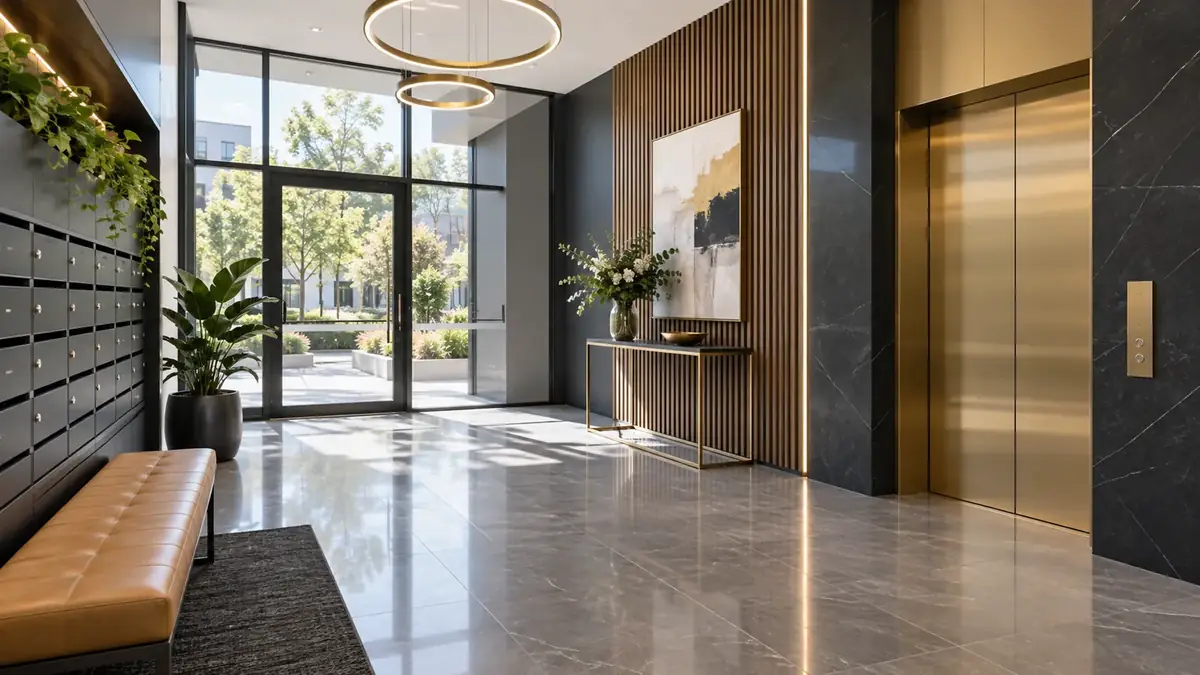
External areas are cleaned on a slower cycle than the inside of the building. Car parks and forecourts are swept and litter-picked on each visit or weekly, while pressure washing of paving, driveways and loading areas is booked a few times a year, often before end-of-financial-year inspections or a leasing campaign.
The entry and forecourt are the first thing a prospective tenant sees. Chewing gum, oil stains, leaf litter and cigarette butts around the door can undo the work done inside. We include a litter pick and sweep of the forecourt in most common-area schedules, and price deeper exterior work separately so it can be timed to when it will count.
Underground and multi-deck car parks gather dust, tyre marks and oil drips, and the ramps and stairwells collect rubbish that blows in from the street. Regular sweeping keeps them presentable; a periodic wash lifts the grime that sweeping leaves behind. Our pressure washing for commercial sites covers car parks, paving, loading docks and building facades at ground level, with water run-off handled so it does not carry grease into stormwater drains.
High-rise windows and gutters are specialist trades and we do not pretend otherwise. If your buildings need them, we will tell you, and we can coordinate their visits around our schedule so crews are not working over each other.
Proposal
How do you request a commercial property cleaning proposal?
Send the list of buildings through the contact form with an address, a rough size and the areas you are responsible for at each. We walk every site, then send one proposal with a schedule and a monthly price per building, plus a summary for the whole portfolio.
Pricing is set building by building, so you can accept some sites now and add others later. For typical rates and what drives them, see our commercial cleaning price guide. Longer terms with defined standards and notice periods are explained on our page about ongoing cleaning agreements.
Questions
What do property managers ask before switching cleaners?
Property managers tend to ask the same three things: whether we can take on more than one building, whether we clean inside tenancies, and what the monthly reporting looks like. The short answers are below; the detail for your portfolio comes out of the site walks.