
Periodic and project work
Specialist Cleaning Services
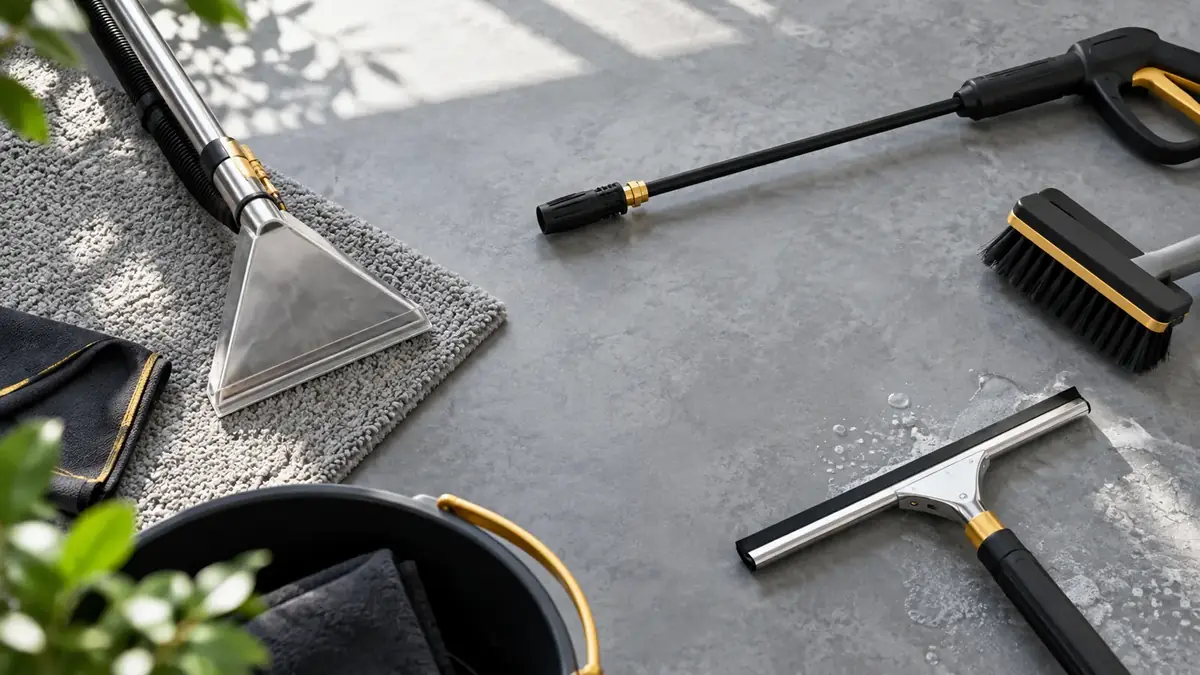
Specialist commercial cleaning services in Melbourne cover the jobs a nightly crew is not set up for: carpet extraction, kitchen exhaust degreasing, pressure washing, stripping and sealing hard floors, and tile and grout restoration. Most businesses need them a few times a year, not every night. This guide suits anyone running a building or a business who wants those jobs planned, done properly and billed alongside their regular clean, and it explains what each service involves, which ones have their own detailed page, and which jobs belong with licensed trades. For the everyday side of what we do, start with our guide to commercial cleaning across Melbourne.
Specialist services
What counts as specialist commercial cleaning?
Specialist commercial cleaning is any job that needs dedicated machines, trained operators or a longer time on site than a routine visit allows. Carpet extraction, exhaust canopy degreasing, pressure washing and floor stripping all fit that description, and each is usually booked as a periodic job rather than every night.
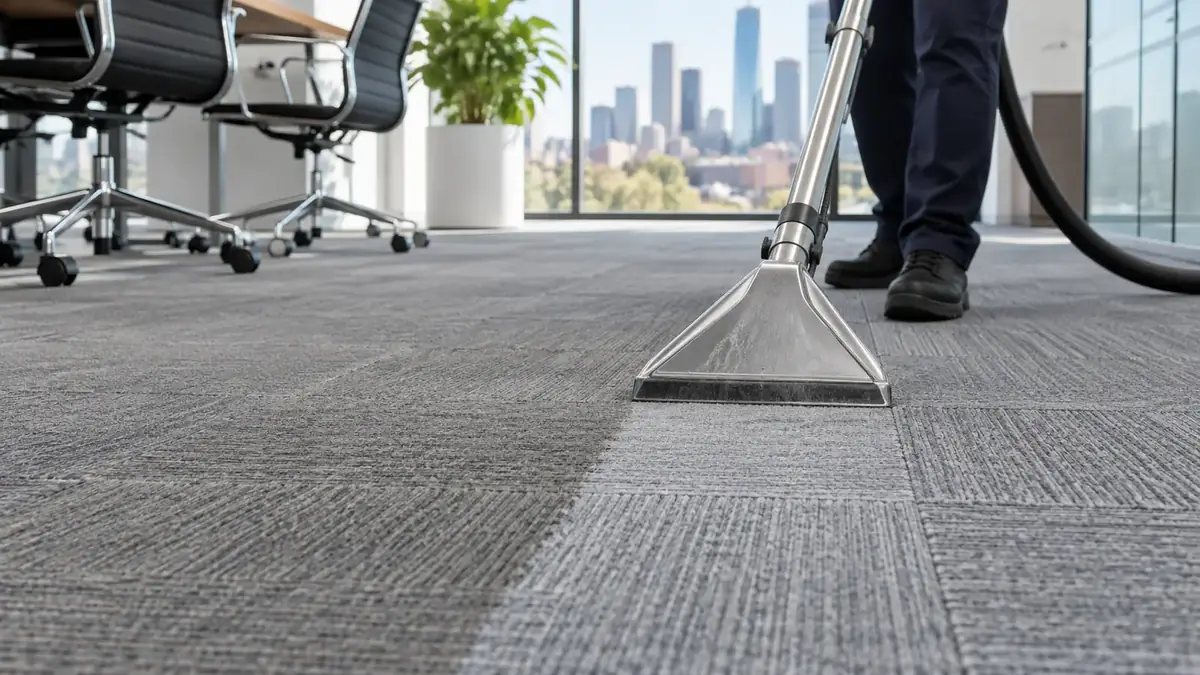 Carpet cleaningHot water extraction and low-moisture methods for offices, shops and common areas.Carpet cleaning in detail
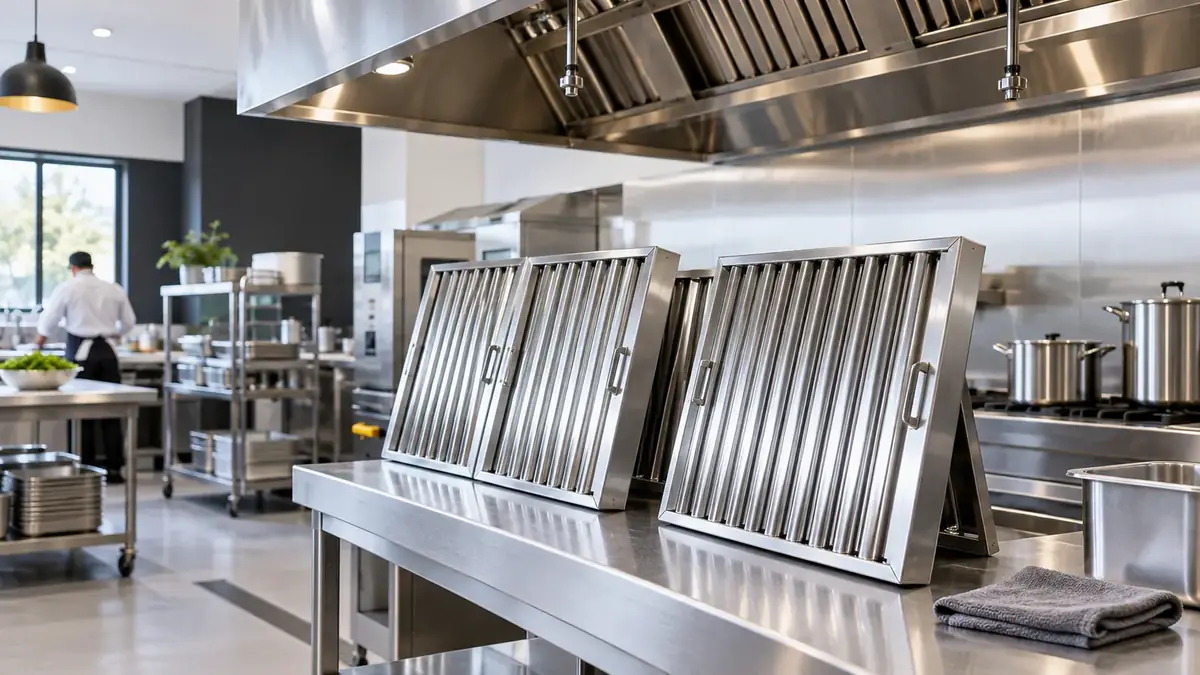 Kitchen exhaustCanopies, filters and accessible ducting degreased on a timetable that matches the kitchen's grease output.Exhaust cleaning in detail
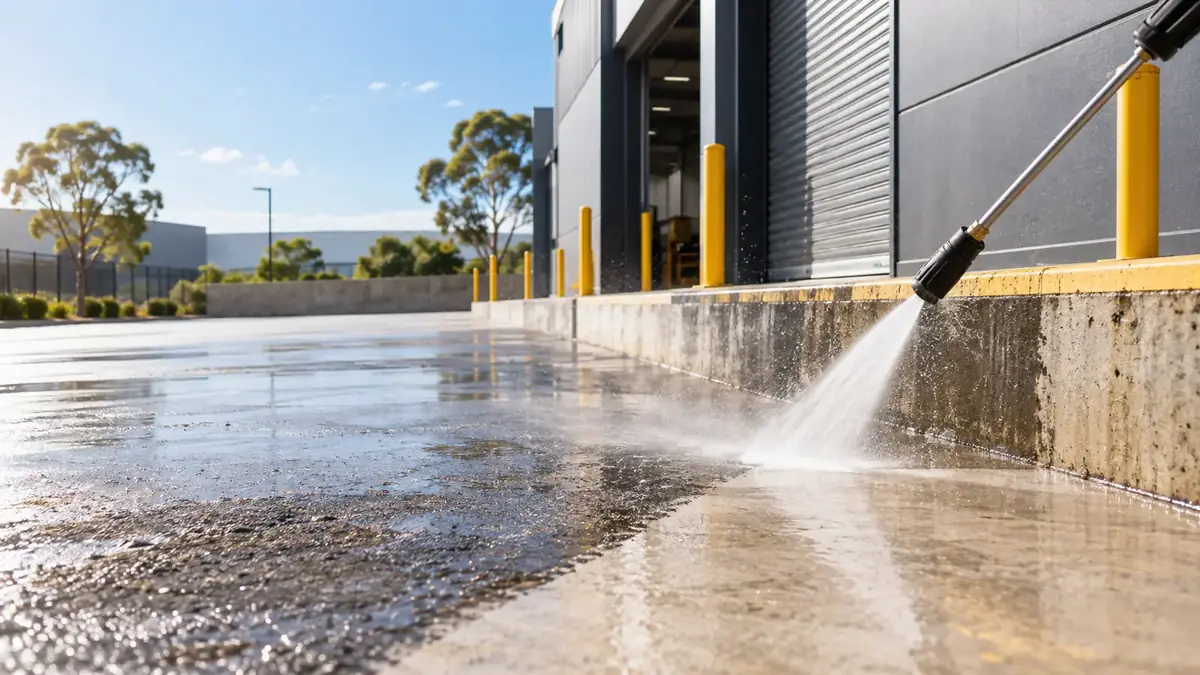 Pressure washingPaving, car parks, loading docks and building fronts at ground level.Pressure washing in detail
The line between routine and specialist is about equipment and time, not importance. A nightly crew vacuums carpet, mops hard floors and wipes the kitchen. What it cannot do in a two-hour visit is pull a year of soil out of the carpet pile, strip three coats of worn floor polish, or wash the grime off a car park. Those jobs need a truck-mounted or portable extractor, a rotary machine, a hot water pressure washer, and a crew that can stay for a full shift or a weekend.
Keeping them separate also keeps prices honest. If periodic work is folded into a regular contract, you either pay for it every month whether it is done or not, or it quietly gets skipped. We list each specialist job on its own line with a date and a price, so you can see exactly when it happens and what it costs.
Most clients use our regular cleaning services for the day-to-day and call on the specialist crew two to four times a year. Others come to us for a single job, such as carpet before an end-of-lease inspection, and never need anything else. Both are fine.
Carpet
When does commercial carpet need a specialist clean?
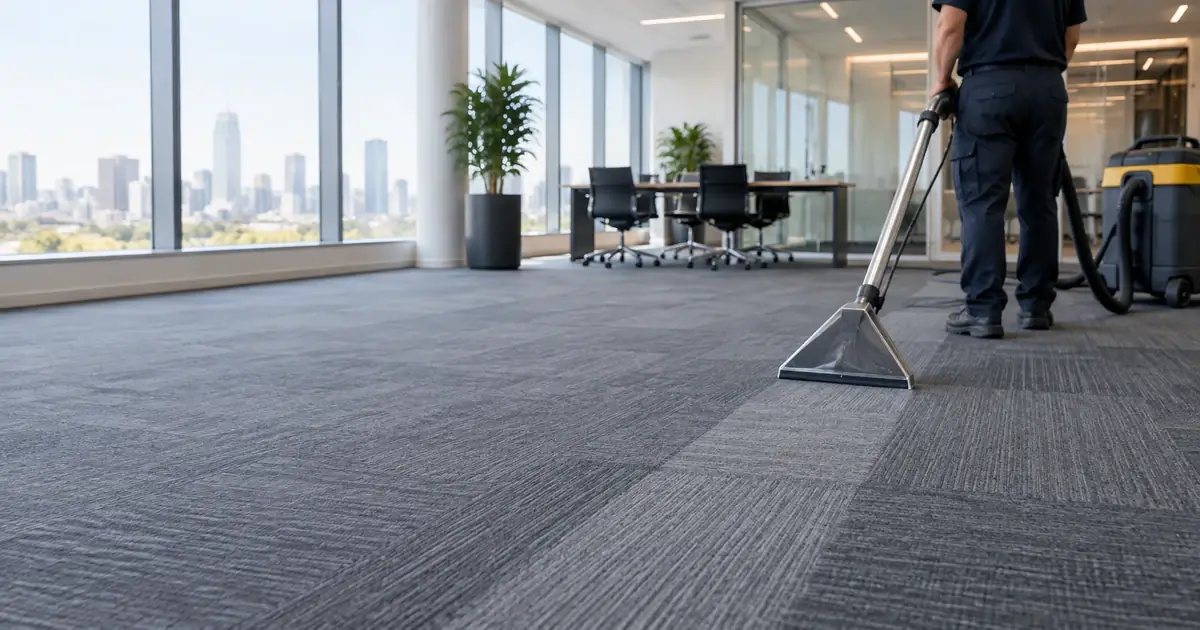
Commercial carpet needs a specialist clean when vacuuming no longer lifts the traffic lanes, when spots keep coming back, or before a lease ends. Busy offices usually book extraction once or twice a year, with the walkways, lift lobbies and entry mats done more often than the quiet corners.
Carpet holds far more soil than it shows. Grit works down into the pile and cuts the fibres every time someone walks over it, which is why the paths to the kitchen and the lifts go grey first. A vacuum removes the loose dirt on top; hot water extraction flushes out what is packed in below and rinses away the residue that makes spots reappear.
Method depends on the carpet and the building. Carpet tiles in a busy open-plan office may suit extraction on a Friday night so they dry by Monday. A hotel corridor that cannot be closed for long may suit a low-moisture method that is walkable within an hour. Our commercial carpet cleaning page explains both, including drying times and stain treatment.
Kitchen exhaust
How often should a kitchen exhaust be cleaned?
A kitchen exhaust should be cleaned on a cycle set by how much grease the cooking produces. Filters in a busy kitchen with fryers, grills or woks may need weekly attention and canopies a full degrease every few months, while a cafe making sandwiches and coffee can go much longer between cleans.
Grease rises with the cooking vapour and settles on everything above the line: baffle filters, the inside of the canopy, the plenum behind the filters and the first sections of duct. As it builds up, the fan works harder, the kitchen gets hotter and smokier, and the layer of grease becomes fuel if a flare-up reaches it. Cleaning on the right cycle keeps the system working and keeps that fuel load down.
Filters are the easy part and many kitchens wash them in-house. Canopies, plenums and accessible ductwork need a crew with degreasers, scrapers and the time to work while the kitchen is cold, usually overnight. Our kitchen exhaust cleaning page covers the process, the before-and-after photos you receive and how the cycle is worked out for your menu.
Pressure washing
What can be pressure washed on a commercial site?
On a commercial site, pressure washing suits concrete and paving, car parks, loading docks, bin areas, entry forecourts, walls and building facades at ground level. Softer surfaces such as timber, render and older brick need lower pressure or a soft-wash method, which the crew chooses after testing a small area.
The biggest difference between a good result and a damaged surface is judgement, not machine size. Too much pressure etches concrete, lifts sand from between pavers and strips paint. The right approach is often hot water and a suitable detergent at moderate pressure, with a surface cleaner attachment on large flat areas so the finish comes out even rather than striped.
Water also has to go somewhere. Wash water from car parks and loading docks carries oil, rubber and grit, and it should not be sent straight into a stormwater drain. We plan collection or diversion before the job starts. The full method, surfaces and scheduling are on our commercial pressure washing page.
Floor care
What is involved in commercial floor cleaning, strip and seal?
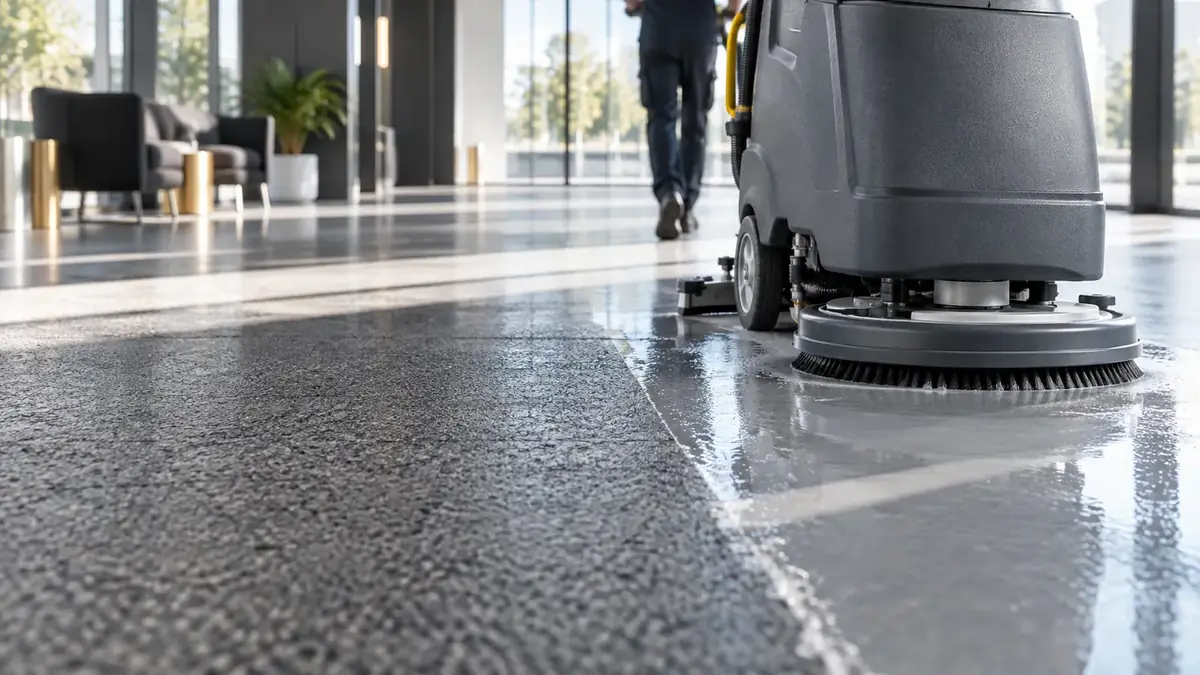
Commercial floor cleaning goes beyond mopping when a hard floor looks dull or patchy. Strip and seal removes the old worn coating from vinyl or sealed floors with a stripping solution and a rotary machine, then lays fresh coats of sealer. Between strips, a scrub and recoat or a burnish keeps the shine.
- Every visitMop and spot cleanDust mop and damp mop, spills and scuffs treated on the day.
- MonthlyMachine scrubWalkways and entries scrubbed to lift ground-in grime.
- QuarterlyScrub and recoatTop layer refreshed with a new coat where wear shows.
- Every year or twoFull strip and sealOld coating removed to bare floor and resealed.
Vinyl in schools, clinics, shops and corridors takes a beating, and a worn seal lets dirt into the surface itself. Stripping is messy work: the old coating is softened, scrubbed off and picked up with a wet vacuum, and the floor must be rinsed and fully dry before any sealer goes down. That is why it is booked for weekends or shutdowns when nobody needs to walk through.
Not every floor gets the same treatment. Timber, polished concrete, terrazzo and natural stone each need their own products, and some should never be stripped at all. The walk-through notes what each floor is, what state it is in and what it needs, so the schedule is written floor by floor rather than as one rule for the whole building.
Steam, tile and grout
Can grubby tiles and grout be brought back?
Most grubby tiles and grout can be brought back with the right process: an alkaline cleaner left to work, rotary or brush agitation into the grout lines, then high-temperature rinsing and extraction to lift the dirt out. Once clean and dry, grout can be sealed so it stays that way longer.
Grout is porous. Mop water carries dirt into it every day, and over months the lines turn from grey to black. Mopping harder does not help, because the dirt is below the surface. Commercial tile cleaning services use hot water or steam and a scrubbing head to reach it, then pull the slurry off the floor rather than leaving it to dry back in.
Steam also works well on surfaces where you want less chemical left behind, such as bathroom fixtures, kitchen splashbacks and hard-to-reach corners around equipment. It is not the answer everywhere: steam can damage some sealed timber, laminate and older adhesives, so the crew checks the surface first.
Where grout is cracked, missing or permanently stained, cleaning will only go so far. We will tell you honestly when regrouting is the better spend.
Grease traps, drains, ducts, solar
Do you handle grease traps, drains, ducts and solar panels?
Some of these we do and some belong with licensed trades. We clean around grease traps and floor drains, degrease kitchen exhaust ducts where they can be reached, and assess commercial solar arrays case by case. Grease trap pump-outs, blocked drains and air-conditioning ducts go to the licensed contractors who do that work.
Grease trap pump-outs
EPA Victoria's waste codes list grease trap waste as reportable priority waste, so it must be collected by a transporter with EPA permission and tracked each time it changes hands. We keep the trap surrounds and nearby drains clean and can work around your pump-out day.
Floor drains and grates
Grates lifted, baskets emptied and channels scrubbed as part of kitchen and bathroom cleans. Blocked or slow drains beyond the grate need a licensed plumber, and we report them when we find them.
Ducts
Kitchen exhaust ducts are degreased as far as access panels allow. Air-conditioning ducts are a separate trade with its own equipment, and we refer that work to HVAC contractors.
Solar panels
Commercial roof arrays need safe roof access, fall protection and the panel maker's cleaning advice. We look at each site before saying yes, and pass on jobs that need specialist height work.
Windows and gutters
Who cleans windows and gutters?
Windows and gutters are handled by specialist Golden Star network teams that are trained and insured for work at height. Ground-floor glass is cleaned as part of our regular visits, while upper-level windows, facades and gutters are booked with the height-safety crews, who can work alongside our schedule.
Working at height is where cleaning becomes genuinely dangerous, and it is not something a general crew should improvise with a tall ladder. Upper-storey glass needs water-fed poles, elevating work platforms (EWPs) or rope access; gutters need roof access and edge protection. Keeping those jobs with teams who do nothing else is the safer choice for everyone on your site.
You still deal with one point of contact. Tell us what you need and we coordinate the visit, so the window crew is not washing glass the day before we pressure wash the entry below it. The detail is on our pages for commercial window cleaning and gutter cleaning for commercial roofs.
Quote
How are specialist jobs quoted and scheduled?
Specialist jobs are quoted after we see the surfaces, because condition changes the time more than size does. Send the site details and the jobs you have in mind through the contact form; we inspect, then send a fixed price per job with a suggested date and the preparation needed from you.
If you already have regular cleaning with us, specialist work is added to the same monthly invoice. If you do not, it is billed as a one-off. Either way, you get photos and a short report when each job is finished.
Questions
What else do clients ask about specialist work?
Three questions come up again and again once clients see the list of specialist jobs: whether they can be combined, whether we do floor stripping ourselves, and what we mean by duct cleaning. Short answers follow.