
Distribution centres and factories
Warehouse and Industrial Cleaning
Warehouse and industrial cleaning is run by our specialist team, which has its own website with the full detail on floors, racking and working around forklifts. This page gives operations and site managers the short version: what that team covers, how it differs from the office cleaning we do here, and where to go next. For the other sectors we cover directly, browse our guide to cleaning by industry.
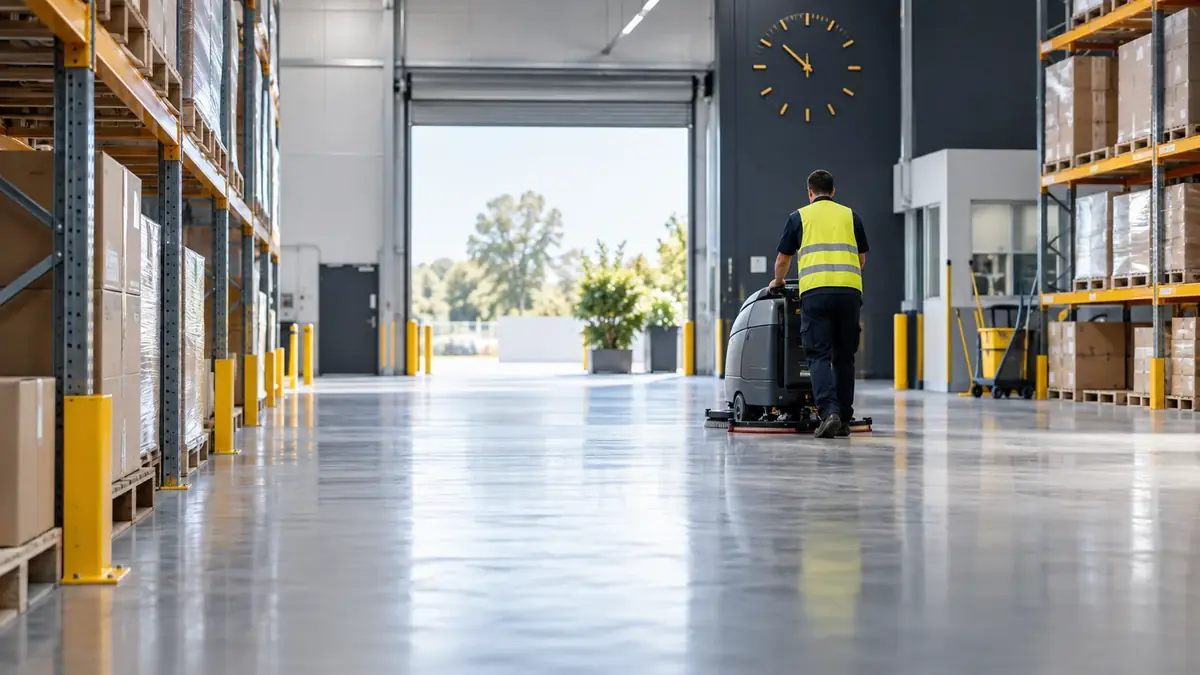
Specialist team
Why is warehouse and industrial cleaning handled separately?
Warehouse and industrial cleaning is handled separately because the risks, machines and timing are different from an office. Crews work near moving forklifts, clean thousands of square metres of concrete with ride-on equipment and fit around shifts that may run all night, so they are trained and equipped for that work alone.
An office cleaner's main tools are a vacuum, a mop and a cloth. On a distribution centre floor those would take weeks to cover the space. Industrial crews use walk-behind and ride-on scrubbers, sweepers for dust and packaging debris, and extension tools for high surfaces. They also know the site rules that matter most: pedestrian walkways, exclusion zones around operating plant, and never cleaning under a rack while it is being loaded.
Keeping this work with a separate crew means your warehouse gets people who are used to it, and our office crews stay focused on offices. Where a site has both, such as a warehouse with a two-level office at the front, the two teams share one schedule and one contact.
Typical scope
What does the specialist team usually look after?
The specialist team usually looks after the warehouse floor, loading docks and dock levellers, racking and high surfaces, mezzanines, amenities blocks and lunchrooms, plus the offices attached to the site. Frequencies range from nightly floor scrubbing in busy distribution centres to a monthly deep clean in a quiet storage facility.
Dust is the constant problem. It settles on stock, racking and the tops of doors, gets tracked into offices and lunchrooms, and on smooth concrete it makes floors slippery for people and forklifts alike. Regular machine sweeping and scrubbing keeps it under control, and a periodic high clean deals with what collects above eye level.
Spills are the other. Oil from forklifts, leaking stock and wet tyres after rain all leave marks that can become slip hazards. Crews spot and treat them as part of each visit and report any that keep coming back, since a repeated spill often points to a leaking machine or a damaged roof sheet that needs fixing.
Timing is set by the site, not the cleaner. Many warehouses run two or three shifts, so floor work is booked for the gap between them or done aisle by aisle while the rest of the building keeps moving. The specialist site sets out how those schedules are built and what a site induction involves.
Amenities often get forgotten in big sites. A warehouse with two hundred staff across three shifts puts heavy load on its toilets, lunchroom and lockers, and those are the spaces staff judge the employer by. The specialist crew cleans them on every visit, restocks consumables and reports broken fittings, so the cleanest part of the building is not only the floor that the forklifts drive on.
Quote
Where should a warehouse or factory send its enquiry?
You can enquire through the specialist site or through our own contact form; either way the request reaches the same team. Tell us the floor area, shift pattern and the parts of the site in question, and we will arrange an inducted walk-through before sending a written price.
If you also need offices, retail premises or other buildings cleaned, those can be quoted alongside the site. Our page on commercial cleaning services across Melbourne covers that side of the business.
Question
What do site managers ask first?
Site managers who land on this page usually want to confirm one thing before reading further: whether Golden Star actually takes on large-floor industrial work, or only offices and shops. Here is the straight answer.