
Homes, forecourts and shared driveways
Driveway Pressure Washing
Driveway pressure washing removes the oil drips, tyre marks, moss, algae and ground-in grime that build up on concrete, exposed aggregate and pavers. We pressure wash driveways for homes, apartment buildings, business forecourts and shared access lanes across Melbourne, using hot water and a spinning surface-cleaner head that keeps the colour even, and we keep the runoff out of the street drain. This page is for owners and managers who want to know what a proper driveway clean involves, what each surface can take, and an honest view of what happens to old oil stains. The method is the same one our crews use on car parks and docks, set out in full on our commercial pressure washing guide.
Done properly
What does a proper driveway pressure washing job involve?
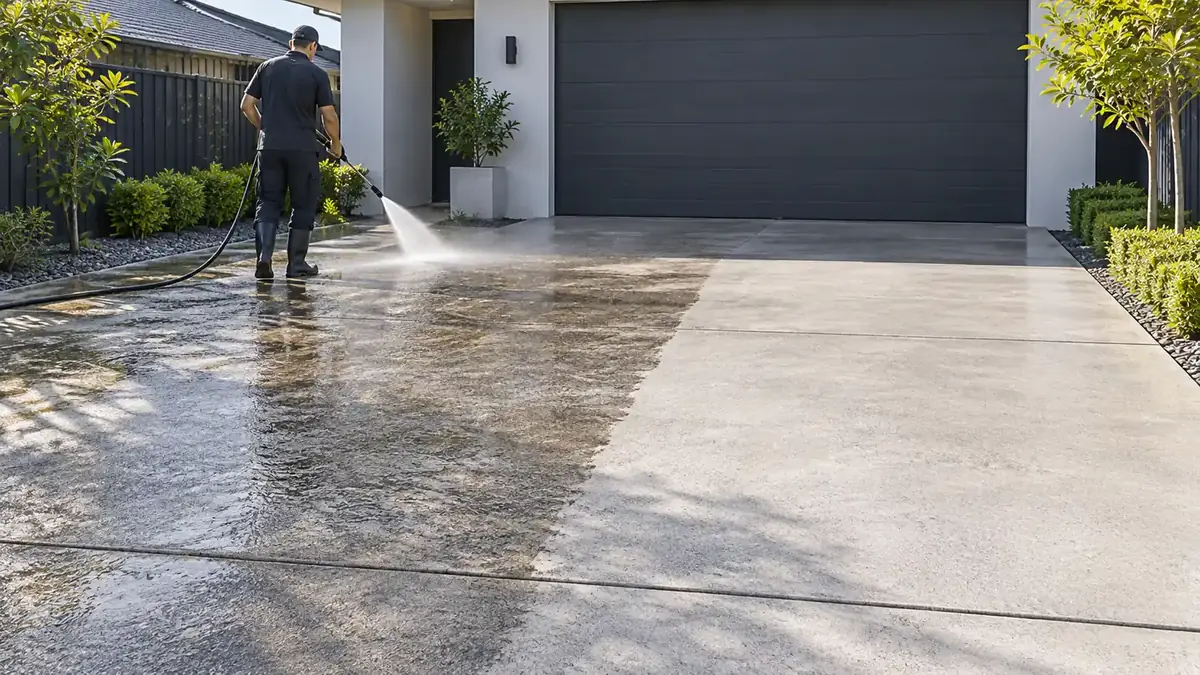
A proper driveway pressure washing job starts with a sweep, pre-treats oil and growth, then cleans the whole surface with hot water and a rotary surface cleaner in overlapping passes. Edges and steps are finished by hand, the runoff is controlled, and the driveway is rinsed and checked before we leave.
The surface cleaner is what separates a good result from a patchy one. A hand-held wand moved back and forth across concrete leaves light and dark stripes where the jet lingered or skipped. A round hood with spinning jets held at a constant height cleans evenly, so the driveway comes up one colour rather than looking like a zebra crossing.
Pre-treatment does a lot of the work. A degreaser on oil drips, left for ten to fifteen minutes, loosens what the water alone would not. A treatment on moss and algae kills the growth so it rinses away with its roots, instead of being blasted off the top and growing back by spring. Leaves, dirt and loose gravel are swept up first so they do not clog the machine or get pushed into the gutter.
We finish by rinsing the driveway, the path to the front door and the nosing of any steps, then checking for missed patches in daylight. If a stain has only partly lifted, we tell you on the spot rather than leaving you to discover it later.
Surfaces
Which driveway surfaces can be pressure washed?
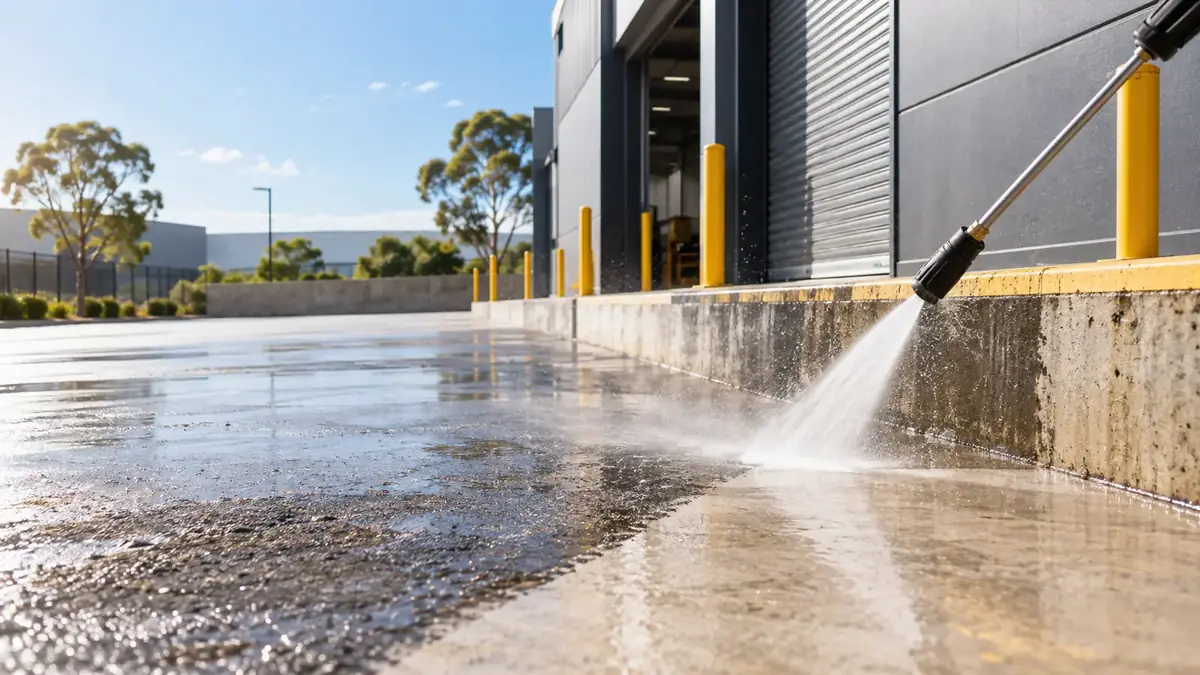
Plain concrete, exposed aggregate, clay and concrete pavers, stamped or coloured concrete and asphalt can all be pressure washed, but not in the same way. Each needs its own pressure, nozzle and distance, and coated or sealed surfaces need gentler treatment so the finish is not stripped.
- Plain concreteTakes hot water and a surface cleaner well. Too much pressure too close can etch the top layer.
- Exposed aggregateModerate pressure only, and no wire brushes, so the stones are not loosened from the cement.
- PaversWashed at an angle to protect the joints; sand is swept back in or topped up afterwards.
- Stamped and colouredUsually sealed. Low pressure and a mild cleaner so the colour coat is not lifted.
Exposed aggregate is the most common Melbourne driveway surface we see, and the one most often damaged by rough cleaning. The decorative stones are held in by a thin layer of cement between them. Blasting that layer with a narrow jet can wear it away, and eventually stones start to come loose. A wider fan, a sensible distance and a surface cleaner set to the right height avoid that problem.
Pavers bring their own issue. The sand between them holds them in place and keeps weeds down. A strong jet aimed along the joints washes it straight out, leaving pavers loose and gaps for weeds. We clean across the joints at a low angle and top up with joint sand where needed, so the driveway is left stable as well as clean.
If your driveway was sealed in the past, look at how it reacts to water. Water beading on the surface usually means the seal is still working, and the clean will be gentler. Water soaking straight in means the seal has worn away, and the concrete will take more treatment, and may be ready for resealing afterwards.
Asphalt driveways are softer than concrete and can be scarred by high pressure, especially on a hot day. They are washed at lower pressure, with more reliance on the detergent and a stiff broom for stubborn patches.
Oil stains, honestly
Will pressure washing remove oil stains from a driveway?
Pressure washing removes fresh oil stains well and lightens older ones a great deal, but deep stains that have soaked into porous concrete for years may leave a faint shadow. How much comes out depends on the age of the stain, the type of oil and how porous the surface is.
Oil does not sit on top of concrete. Concrete is porous, and oil soaks in like water into a sponge. The deeper it goes, the harder it is to draw back out. Hot water and a degreaser can pull out what is near the surface. For older stains, a poultice left for a day or more can draw out more, but even that has limits, and some old stains will always show a little on pale concrete.
We would rather tell you that before we start than after. At the quote stage we look at the stains, tell you which are likely to go, which will fade, and which will stay faintly visible. If a stain is the main reason you are cleaning, it may be worth trying a spot treatment on it first, before committing to the whole driveway.
Rust marks, tyre marks, paint and leaf tannin stains each need a different treatment again. Rust from garden furniture or pot plants needs a rust remover; tyre marks respond to a degreaser and scrubbing; leaf stains usually fade in the sun after the wash. We identify each type rather than hoping the water takes care of it.
Runoff and sealing
What happens to the water, and should the driveway be sealed?
Wash water is swept and steered away from the street drain, and on oily driveways it is collected rather than left to run into the gutter. Once the surface is clean and fully dry, sealing is worth considering for exposed aggregate and coloured concrete, since a sealed surface resists fresh marks and washes up faster next time.
Street drains in Melbourne carry stormwater to local creeks and the bay. EPA Victoria's advice on keeping stormwater clean suggests sweeping and binning debris rather than hosing it into the gutter, and makes it clear that preventing waste entering drains is a duty everyone shares. On a driveway, that means sweeping first, using detergents sparingly, covering or bunding the kerb drain where the runoff carries oil, and picking up the sludge rather than leaving it at the bottom of the driveway.
Sealing is optional, and not every driveway needs it. Plain concrete in good condition is often fine without it. Exposed aggregate, stamped and coloured concrete usually benefit, because the sealer protects the colour, holds the surface stones and makes oil and dirt sit on top instead of soaking in. Sealer only bonds to a freshly cleaned, bone-dry slab, which usually means sealing a day or more after washing, on a dry, mild day.
We can quote sealing on request as a separate job, with the sealer type explained, since some finishes give a wet-look gloss and others leave the surface looking natural. Sealers also wear, and most driveways need resealing every few years depending on traffic and sun.
How often
How often does a driveway need washing?
Most home driveways only need washing every year or two, while shaded, sloping or heavily used ones may need a yearly clean to stay safe and presentable. Business forecourts and shared driveways usually need washing more often, because they take more cars and more foot traffic.
Shade and slope change everything. A driveway on the south side of a house, under trees, stays damp through Melbourne's cooler months and grows a green film that turns slippery after rain. A steep driveway with that film is a genuine fall risk, particularly for older residents and visitors. Those driveways benefit from a wash each autumn, before the wet months, with a treatment that slows regrowth.
Sunny, flat driveways are more forgiving. They gather dust, tyre marks and a few drips, but they rarely become hazardous. A wash before selling or renting the property, before a family event or after building work next door is often enough.
For apartment buildings and commercial forecourts, a regular cycle on the building's maintenance plan keeps the entry looking cared for and avoids the heavier, more expensive restoration clean that a neglected surface eventually needs. Between washes, a regular sweep and prompt attention to fresh oil drips make a noticeable difference.
Quote
How do you get a driveway washing quote?
Send your suburb, the rough size of the driveway and a couple of photos through the contact form, including close-ups of any stains you care about. We confirm the surface, tell you honestly what to expect from the stains, and give a fixed price and a date.
For typical costs, see our page on pressure washing prices in Melbourne or the broader cleaning price guide. If you also run a business or manage a building, our commercial cleaning services can look after the rest of the site.
Questions
What do people ask before booking a driveway clean?
People booking a driveway clean mostly ask about pavers, oil stains and sealing. Here are straight answers, with the details for your driveway confirmed when we see the photos or the site.