
Each industry, its own scope
Industries We Clean
This is our guide to commercial cleaning by industry in Melbourne. An office, a cafe kitchen, a hotel lobby and an aged care corridor all need cleaning, but they get dirty in different ways, open at different hours and answer to different rules. Below you will find how we approach each one, what changes in the scope and the records, and which industries are handled by our specialist sister sites. If you just want the overview of who we are and how we work, start with our page on commercial cleaning in Melbourne.
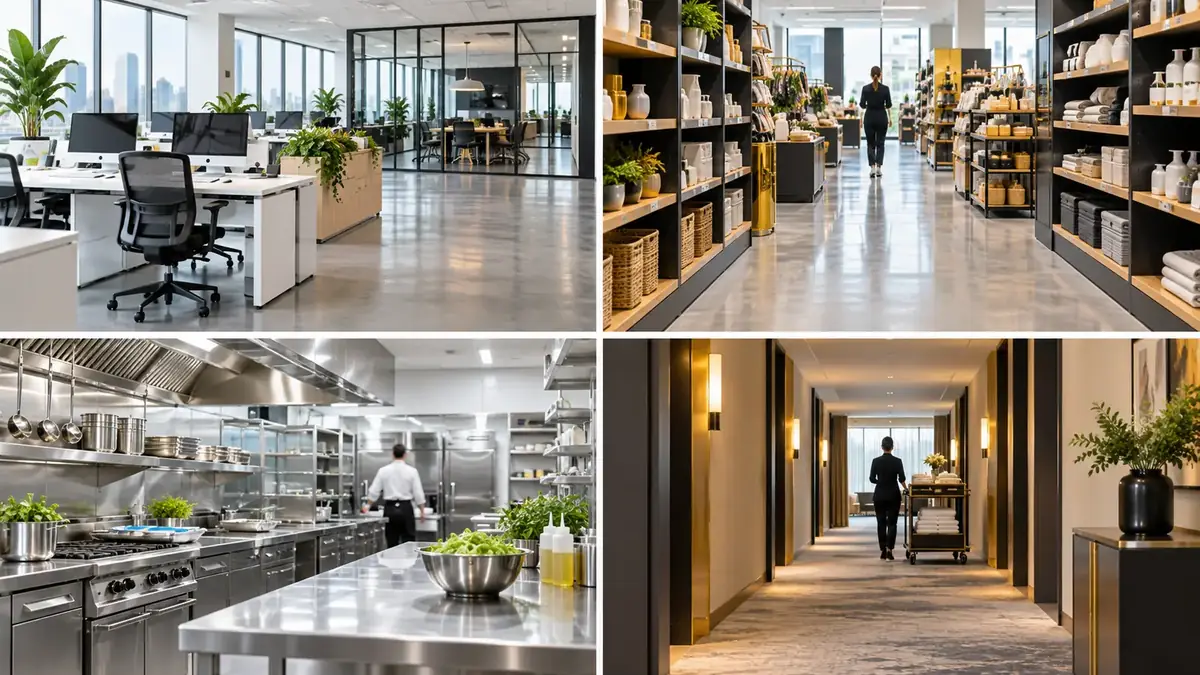
Why it matters
Why does commercial cleaning by industry matter?
Industry decides when a site can be cleaned, what the biggest risk is and which records someone will ask to see. A restaurant needs grease and food safety handled after close; an office needs quiet evenings and a lived-in kitchen fixed; aged care needs infection control done without disturbing residents.
| Industry | Cleaning window | Main risk | Record people ask for |
|---|---|---|---|
| Offices | Evenings after staff leave | Shared kitchens and bathrooms | Completion record per visit |
| Retail | Before opening or after close | Slips at entries, floor wear | Store-by-store checklist |
| Restaurants and cafes | After the last service | Grease, pests, food safety | Kitchen cleaning schedule |
| Hotels | Around guests, day and night | Public areas never empty | Area rounds and incident log |
| Commercial property | Rostered through the day | Shared spaces nobody owns | Reports for owners |
| Aged care | Around residents' routines | Infection spread | Cleaning and IPC logs |
The same five-point method sits under every industry: inspect, scope, assign a regular crew, record each visit, review with you. What changes is the detail. A cafe scope lists drains and canopy filters; an office scope lists hot desks and meeting rooms; an aged care scope lists touch points by room and the colour-coded cloths used in each. The paperwork follows the industry too, so the record you receive is the one your auditor, landlord or head office actually wants.
Some industries are regulated in ways that shape cleaning directly. Food businesses answer to the Food Standards Code, and Food Standards Australia New Zealand explains cleaning and sanitising of food premises and equipment. Aged care providers work to the Aged Care Quality Standards. We do not replace anyone's compliance program, but our scope is written to fit inside it, and our records are kept in a form that slots into your own audits.
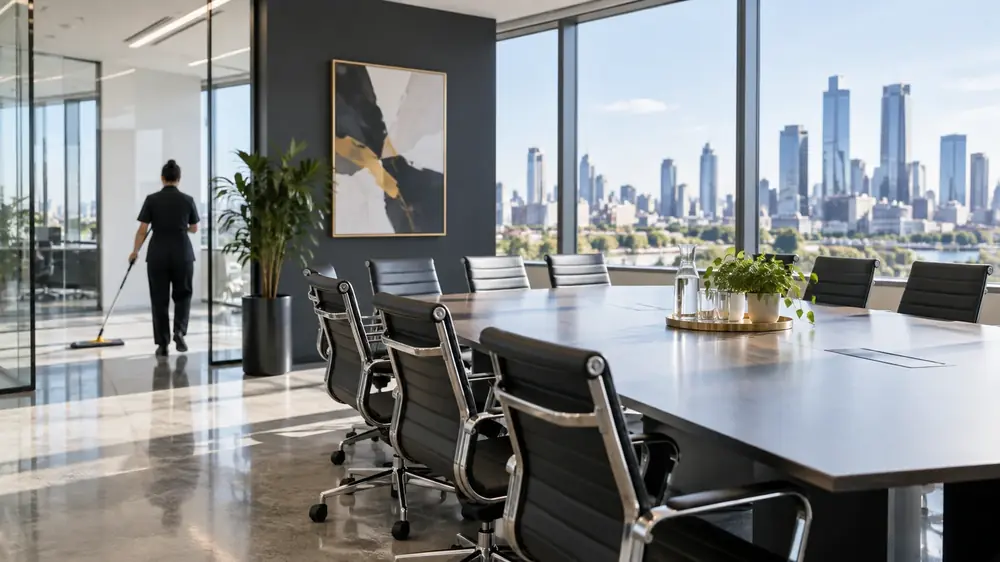
How do we clean offices?
Offices are cleaned in the evening from a checklist split by area and frequency, with kitchens, bathrooms and bins every visit and deeper tasks rotated across the month. The same crew returns each time, so the building is learned rather than rediscovered.
The kitchen decides how an office feels, so it gets the most attention: sink, dishwasher, fridge handles and the bench around the coffee machine. Hot desks are wiped nightly because nobody owns them. Corporate floors with client-facing rooms have their own page.
Offices change during the year, and the scope changes with them. A new team moves onto a floor, a meeting room becomes a quiet room, or staff return to the office more days a week. We adjust frequencies at the quarterly review so the clean follows how the space is actually used.
What changes: quiet work around late staff, secure areas logged, and papers never moved.
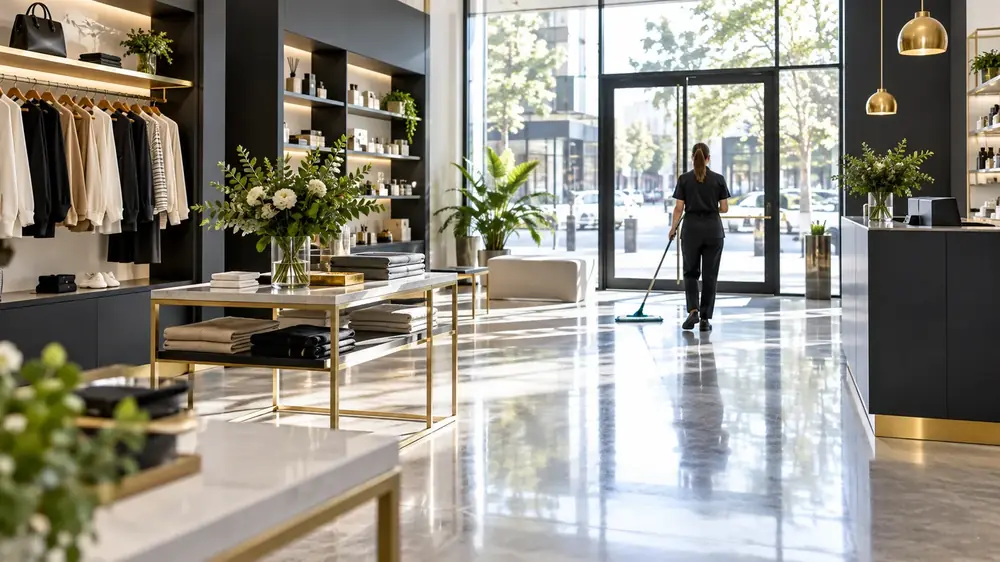
How do we clean retail stores?
Retail stores are cleaned before the doors open or straight after close, so floors are dry and glass is clear for the first customer. Entries, fitting rooms, counters and staff areas each have their own list, and chains get one format across every store.
Floors carry most of the work in retail: grit from the street, scuffs from trolleys and wear along the busiest aisles. Mats are lifted and cleaned under. Shopping centres add food courts, amenities and malls that stay open all day.
Seasonal peaks matter in retail. December trade, stocktake weekends and new-season fit-outs all bring extra dust and foot traffic, so we plan extra visits around them rather than letting a busy month undo the rest of the year.
What changes: short windows between close and open, stock never touched, and slip risk managed at entries.
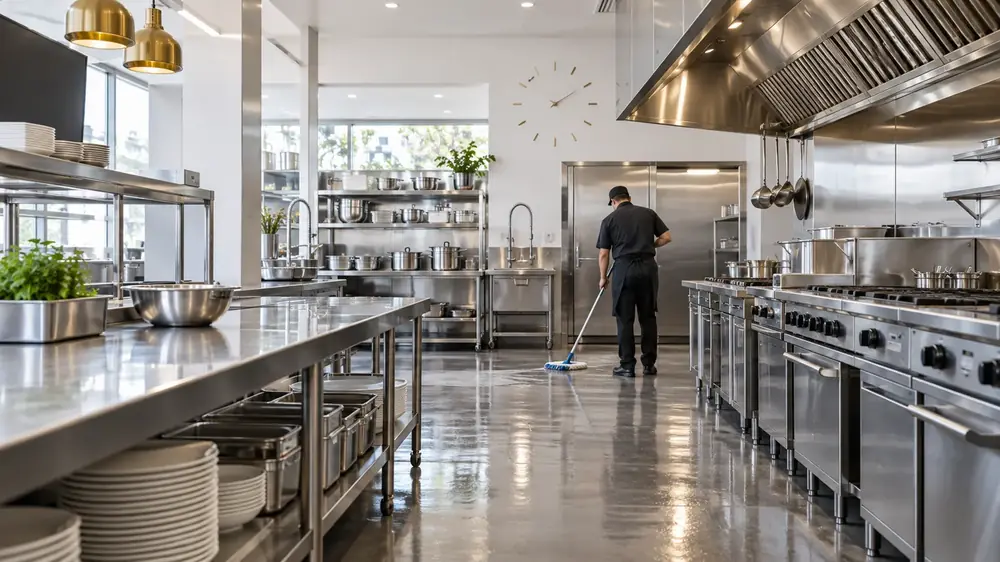
How do we clean restaurants and cafes?
Once the last table has gone, a restaurant or cafe gets its clean: kitchen floors degreased, drains treated, equipment pulled out on a cycle and front of house reset. Your chefs look after food contact surfaces while they cook, and our crew starts once the pass is empty.
Grease is the enemy in hospitality: on floors, walls, canopy filters and behind the fryer. Left too long it becomes a slip hazard and a pest magnet. Our scope follows the order a kitchen gets dirty, not the order rooms appear on a floor plan.
Front of house is judged by diners in the first minute: the entry, the table they sit at and the bathroom they visit. Those are reset every night, and high chairs, menus and condiment stations are wiped on the same round.
What changes: late finishes, food safety in mind, and canopy filters on their own cycle.
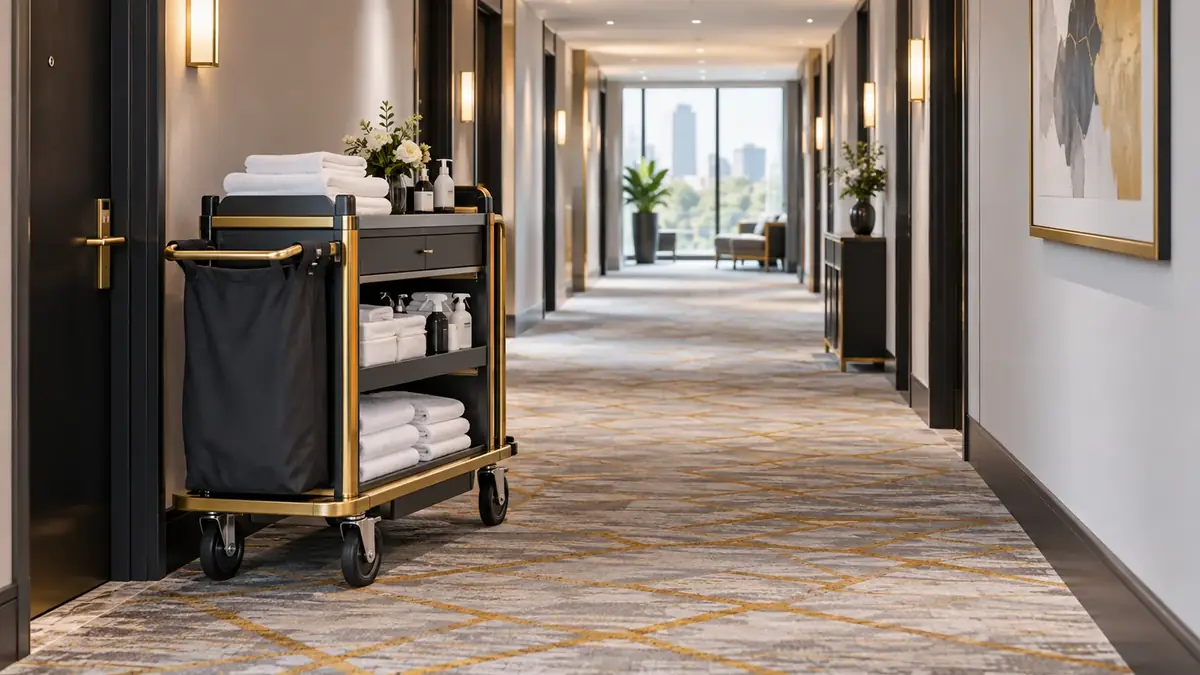
How do we clean hotels and accommodation?
Hotels and serviced apartments are cleaned around guests who never fully leave. We cover lobbies, corridors, lifts, function rooms, gyms and back-of-house areas on rostered rounds, while daily room servicing usually stays with the property's own housekeeping team, with turnovers available by arrangement.
Public areas in a hotel are judged at every hour, so rounds are short and frequent rather than one long night clean. Function rooms are turned around between events, often with only an hour or two between the last guest leaving and the next setup.
Crews working in hotels are briefed on guest privacy and on what to do if a guest stops them with a question, which is a normal part of working in a hotel. A polite answer and a quick call to reception is part of the job.
Back-of-house areas, such as staff rooms, laundries and loading docks, are cleaned on a separate cycle so the guest-facing rounds never lose time to them.
What changes: guest-facing manners, discreet equipment, and tight event turnarounds.

How do we clean commercial property?
Commercial property cleaning covers the shared parts of buildings: lobbies, lifts, stairs, common bathrooms, car parks and bin rooms. It runs on a roster agreed with the building manager, with reports written for owners and defects flagged as they are found.
Building managers need two things from a cleaner: a building that looks cared for, and proof it was done. We provide both, and we report the small faults our crews notice on their rounds, from a blown light to a sticking door.
Portfolios with several buildings can share one scope format, so a property manager can compare sites side by side. When a tenant moves out, we can switch the vacated floor to a lighter visit until it is leased again, which keeps the building presentable without paying for full cleaning of an empty space.
What changes: owner reporting, tenant requests, and multiple buildings on one roster.

How do we approach aged care cleaning?
Aged care cleaning focuses on infection prevention: touch points, handrails, bathrooms and shared lounges cleaned on a set schedule with colour-coded equipment, working around residents' routines and the facility's own infection control plan rather than replacing it.
The Aged Care Quality and Safety Commission's standards treat infection prevention and control as part of a safe environment, including cleaning practices and waste handling. Our role is to deliver the environmental cleaning that plan relies on.
Residents are at home, so crews knock, introduce themselves and clean at a pace that suits the room's occupant. Quiet vacuums and early finishes in shared lounges help keep the day calm.
What changes: resident dignity first, quiet equipment, and strict zone separation.
Specialist sites
Which industries are handled by specialist sites?
Medical centres, warehouses, childcare centres, schools and gyms each have a dedicated service within our network. Their cleaning needs specific training, equipment or records, so each summary page below explains the service and connects you with the right team.
These industries are not add-ons to an office program. A childcare room is cleaned around toys, cots and nappy change areas. A warehouse needs machines that scrub a whole slab and people trained around forklifts. A gym has rubber floors, sweat and shared equipment that people touch all day. A school has term breaks that decide when the heavy work gets done.
Keeping them separate lets each team do one kind of site well. If you run more than one kind of premises, such as an office with an attached warehouse or a gym inside a larger building, tell us and we coordinate the visits so every part of the site is covered without two crews tripping over each other.
Each summary page explains what the specialist service covers, why it is handled separately, and how to reach the team that runs it. You can still start with us: send one enquiry for the whole site and we will pass the specialist part to the right people.
Questions
What do businesses ask about industry experience?
Two questions come up whenever a business compares cleaners across industries: whether we know their kind of premises, and whether one team can handle a building that mixes several uses. Here are the answers, followed by a link to book a walk-through.
Do you have industry experience?
Can one team clean mixed-use sites?
Ready to talk about your premises? Request a free site assessment and tell us which industry you are in.