
Car parks, docks, facades and forecourts
Pressure Washing in Melbourne
Golden Star offers pressure washing in Melbourne for commercial sites: car parks, loading docks, bin enclosures, entry forecourts, footpaths, walls and ground-level building facades. We use hot water where grease and oil need it, lower pressure or soft washing where the surface would be damaged by force, and wash water recovery so dirty runoff does not end up in the stormwater system. Work is booked early in the morning, overnight or on weekends so customers, tenants and delivery trucks are not held up. This page is for property managers, centre managers, business owners and body corporate managers who want to know what can be washed, how it is done safely, what affects the price and what to expect on the day. Pressure washing sits alongside carpet, floor and exhaust work in our range of specialist commercial cleaning jobs.
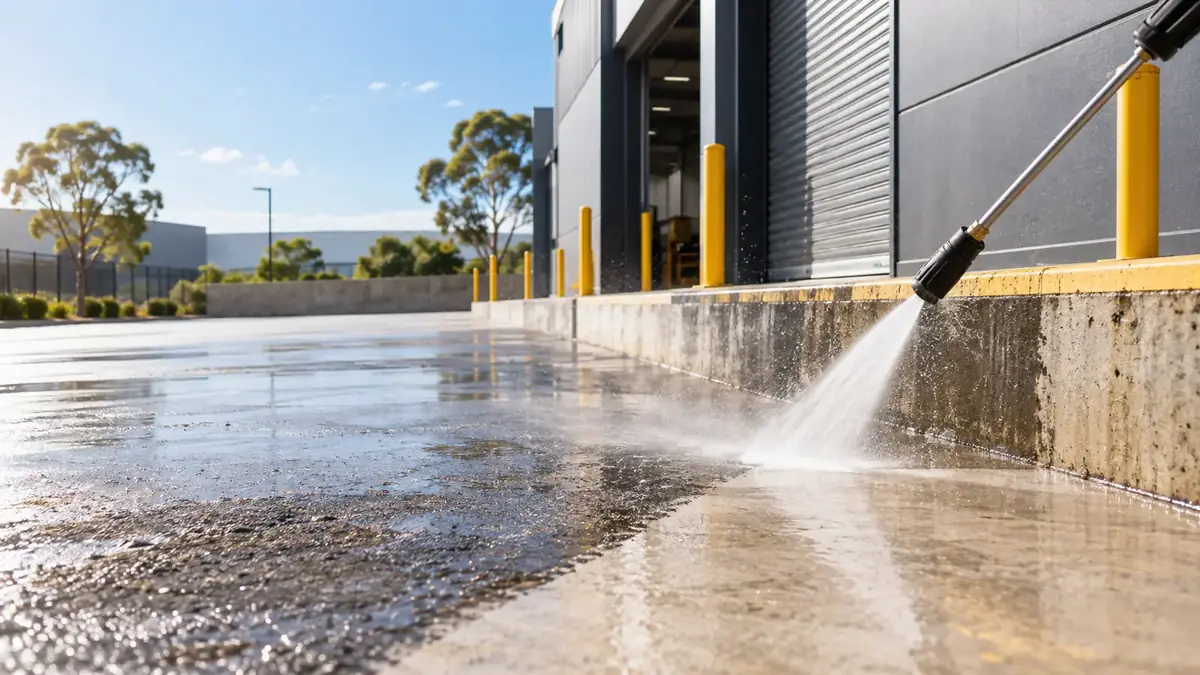
Commercial sites
What does commercial pressure washing cover?
Commercial pressure washing covers the hard outdoor and semi-outdoor surfaces of a business site: concrete, asphalt, pavers, stone, brick, metal cladding, bins and bin rooms. It removes oil, tyre marks, chewing gum, grime, algae and moss, and it is matched to each surface so the clean does not damage what it is meant to restore.
- Concrete and asphaltCar parks, driveways, loading aprons. Hot water and a surface cleaner for an even finish.Pressure wash
- Pavers and stoneForecourts, plazas, walkways. Moderate pressure so joint sand stays put.Pressure wash
- Render and painted wallsBuilding fronts and fences. Low pressure with a cleaning solution.Soft wash
- Metal, glass and signageAwnings, cladding, shopfront frames. Gentle rinse, no direct blast.Soft wash
Most people picture a single machine and a single blast of water. In practice, pressure washing services on a commercial site are a set of techniques. Large flat areas are cleaned with a rotary surface cleaner, a round hood that spins two jets close to the ground, so the result is even rather than covered in stripes. Edges, corners and steps are done with a wand. Stubborn stains get a pre-treatment and time to work before any water is applied. Walls and delicate materials get low pressure and a cleaning solution, rinsed off gently.
Heat is often more important than pressure. Oil, grease and food residue soften in hot water and lift off without needing high force, which is kinder on the surface and faster for the crew. Cold water at high pressure can push grease around without removing it, and it is more likely to etch concrete or strip grout.
We walk the site with you before quoting, test a small hidden patch where the material is unfamiliar, and agree what the finished result should look like. That test matters most on older brick, sandstone, painted surfaces and anything with a coating, where the wrong method can do lasting damage.
Pressure washing is usually a periodic job rather than a regular one. A shopping strip may book its forecourt twice a year, before Christmas and before winter. A distribution centre may want its loading docks done every quarter. A managed office building may add its car park and entry to the annual maintenance calendar. We fit the timing to what the site actually needs.
Car parks and loading docks
How are car parks and loading docks cleaned?
Car parks and loading docks are swept first to remove loose litter and grit, then oil stains are pre-treated, and the surface is washed with hot water and a surface cleaner, bay by bay. Wash water is contained and recovered as the crew goes, and the area is reopened in sections so the site keeps working.
Car parks collect a particular mix of dirt: oil drips under every parked car, tyre marks on ramps and turning circles, rubber dust, leaves and litter blown in from the street, and in undercover car parks a film of exhaust soot on walls and columns. Line markings disappear under it all, which makes the car park look older than it is and harder to use safely.
Loading docks are harder still. Forklift tyres, spilled product, pallet splinters, diesel and hydraulic fluid build up where trucks back in, and the dock is often busy most of the day. We clean in the gaps between deliveries or overnight, working around dock levellers and roller doors, and pay particular attention to the slip hazard left by oily concrete.
For underground and multi-level car parks, ventilation and lighting come into it. Hot water units run on fuel, so the crew positions them where exhaust clears safely, and uses bright work lights and signage so drivers can see the work area. Bays are coned off in blocks, with the building manager told in advance so tenants can move their cars.
Many property managers pair a car park wash with regular common-area cleaning, so the sweep and litter pick happen every visit and the wash happens a few times a year. Our page on cleaning for property and facility managers explains how that fits into a building program.
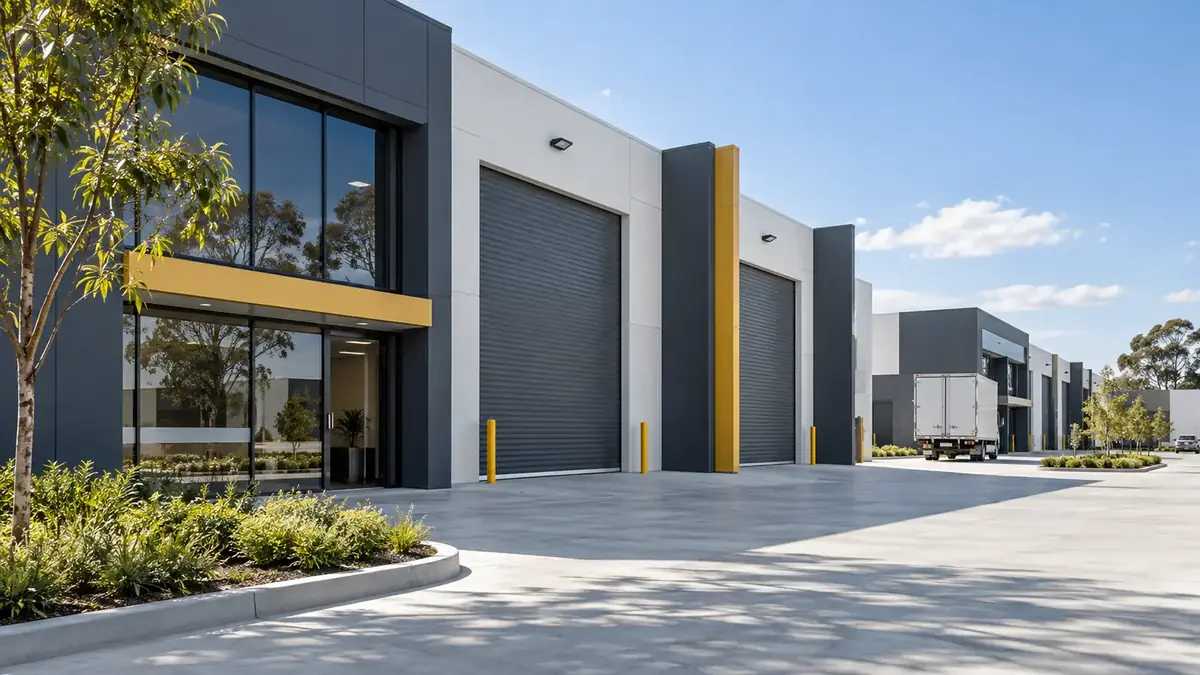
Facades and footpaths
Can building facades and footpaths be pressure washed safely?
Yes, if the pressure and method suit the surface. Concrete footpaths and granite paving handle strong hot-water washing. Brick, render, painted walls, timber and signage need low pressure or a soft wash, where a mild solution loosens the grime and a gentle rinse carries it off. We test first and adjust.
Soft wash
Low pressureFor render, painted surfaces, timber, cladding and signage. A cleaning solution breaks down grime and biological growth, then a gentle rinse removes it without forcing water behind the surface.
Moderate pressure
With careFor brick, pavers and sealed stone. Enough force to lift dirt without blasting out mortar or joint sand. Joints are checked afterwards and topped up where needed.
High pressure, hot water
Hard surfacesFor bare concrete, asphalt and granite that can take it. Heat softens oil and grease, and a surface cleaner keeps the finish even across large areas.
The front of a building and the footpath outside it are the first things customers and tenants see. Chewing gum spots, cigarette butts in the corners, pigeon droppings under awnings, rust marks from signage brackets and a green film on the shady side all add up to a tired look. A good wash brings the entry back into line with the effort that goes into the inside of the building.
Biological growth is the other common problem. Moss, algae and lichen take hold on the south-facing and shaded sides of buildings, on paving under trees and on low walls that stay damp through Melbourne's winter. Blasting them off with high pressure removes what you can see but leaves the roots in the surface, so they return within months. A treatment that kills the growth, left to work before a gentle rinse, gives a longer result and is much kinder to brick and render. On paving, a follow-up treatment slows regrowth further.
Chewing gum needs its own approach. It will not simply wash off; it is softened with steam or very hot water and lifted, spot by spot. On a busy city footpath, gum removal can take longer than the rest of the wash combined, so we quote it separately where it is heavy.
Footpaths outside shops are public land in most cases, so the work has to keep pedestrians safe. We clean early, before foot traffic builds, keep a dry walkway open with barriers and signs, and never spray toward passers-by or open shop doors. If a footpath permit is needed from the council for the equipment, we arrange it as part of the job.
Upper-level facades and glass are a different job. Anything above what can be reached safely from the ground goes to our height-safety crews, and we will tell you where that line sits on your building during the inspection.
Runoff and the EPA
What happens to the dirty water from pressure washing?
Dirty water from pressure washing is contained, collected and disposed of properly rather than hosed into the gutter. Stormwater drains are blocked or covered, wash water is directed to a low point and vacuumed up, and oil is separated before the water leaves site with approval or goes to a licensed facility.
- Protect drainsStormwater pits covered with drain mats or bunded off before washing starts.
- Direct the flowTemporary bunds guide wash water to a low collection point.
- RecoverA recovery vacuum lifts the water and grit into holding tanks.
- Dispose properlyOil separated, water to an approved sewer point or a licensed facility.
This is not just good practice. In Victoria, stormwater drains flow straight to creeks, rivers and the bay without treatment. EPA Victoria's guidance on stormwater pollution names detergents, oil and chemicals as pollutants to keep away from drains, and explains the general environmental duty: everyone must eliminate or reduce the risk of harm and prevent waste entering stormwater drains so far as reasonably practicable. Wash water from a car park or loading dock carries exactly those pollutants.
How much recovery a job needs depends on what is being washed. Water from a footpath with only dust and leaves is very different from water off a workshop apron full of oil. The inspection covers where the drains are, what is likely to be in the runoff and where it can go, and the method is planned around that. On some sites, a sweep-and-scrub approach using far less water is the better choice.
Detergents are used sparingly and chosen for the job. Biodegradable does not mean harmless in a creek, so even gentler products are recovered with the rest of the water rather than left to run away. If you are unsure whether a previous contractor handled this properly, it is a fair question to ask anyone who quotes on your site.
Bins and bin rooms
Can bin rooms and waste areas be washed down?
Yes, and they are some of the most useful areas to wash. Bin rooms, compactor bays and waste enclosures collect food scraps, leaking bags and sticky residue that smell, attract flies and rodents, and make floors slippery. A hot water wash with a degreaser and sanitiser resets them.
In a restaurant precinct, shopping centre or apartment building, the waste area is often the worst-smelling spot on the site, and the smell drifts into loading docks, corridors and car parks. Sweeping helps for a day. Washing the floor, walls, drains and the bins themselves removes the film that holds the odour, and a regular cycle stops it returning so quickly.
Waste areas are also where runoff needs the most care. The water off a bin room floor carries food waste, grease and whatever leaked from the bags, which is exactly what should not reach a stormwater pit. Many bin rooms have a floor waste connected to the sewer for this reason; where they do not, the water is recovered and taken away like any other contaminated wash water.
Wheelie bins and bulk bins can be washed at the same visit. They are emptied first, ideally on collection day, then washed inside and out and left to dry upside down. For food businesses this ties in neatly with the cleaning schedule an inspector will want to see.
Planning the day
How is a pressure wash planned around a working site?
A pressure wash is planned around the people and vehicles that use the site. We agree the start and finish times, which areas close in which order, where machines and water tanks will sit, and who needs to be told, from tenants moving cars to the security team opening gates.
On a busy site the plan matters as much as the cleaning. A car park might be done in three sections over three nights so it never fully closes. A shopping strip forecourt might be washed from 4 am so it is dry before the first cafe opens. A loading dock might be split between the gap after morning deliveries and the gap before evening ones. Getting this right avoids the most common complaint about pressure washing, which is being in the way.
Weather is part of the plan too. Melbourne can deliver heavy rain with little warning, and a downpour during a wash can overwhelm the drain covers and send dirty water where it should not go. We watch the forecast in the days before, and move the job rather than wash into a storm. Extreme heat changes things as well, because detergents dry on hot concrete before they can work.
Safety signage, barriers and a clear walkway go up before the first machine starts, and a crew member keeps watch where the public or vehicles are close by. At the end, the area is checked, loose debris cleared and the surface left safe to walk on before it reopens.
Driveways
Do you pressure wash driveways?
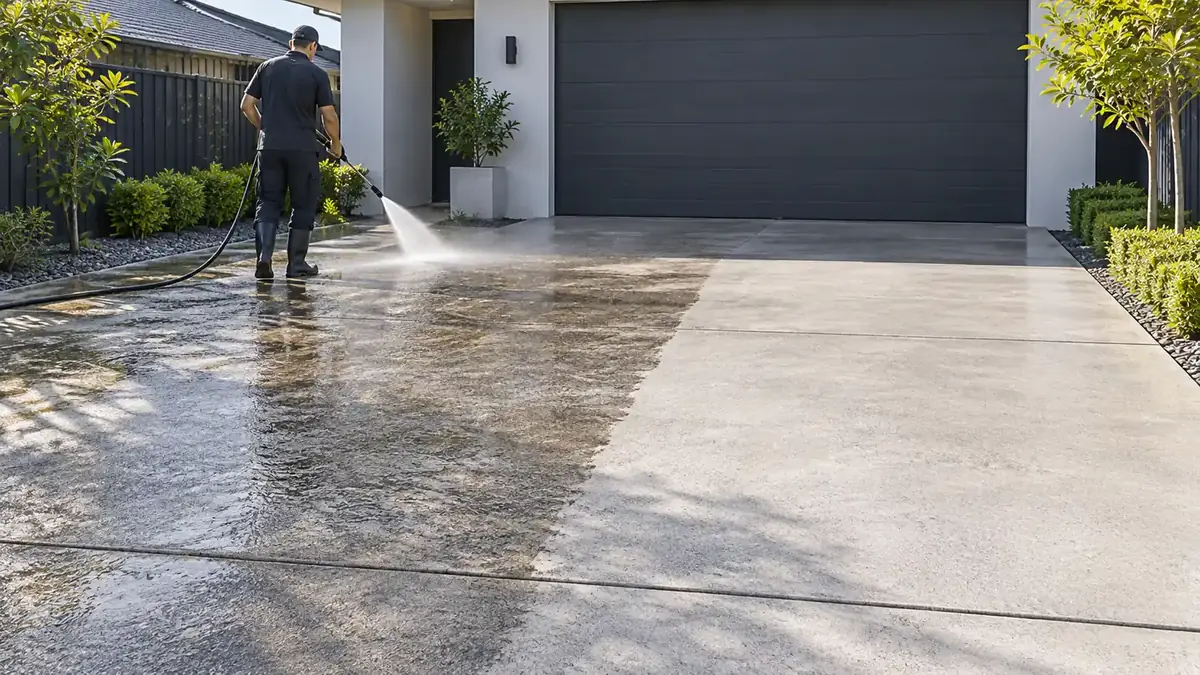
Yes. Driveways and forecourts, whether plain concrete, exposed aggregate, pavers or stamped concrete, are washed with the same method used on commercial sites, adjusted for the surface. Oil stains are pre-treated, moss and algae are killed off, and the finish is kept even across the whole area.
Driveways take more than they look like they should. Cars drip oil, tyres track in dirt, shaded sections grow moss in Melbourne's damp winters, and leaf litter stains pale concrete. A proper clean brings the surface back to an even colour and removes the slippery film that makes a sloping driveway unsafe after rain.
Business forecourts, service station aprons, medical centre drop-off areas and the driveways of managed residential buildings are common jobs for us. We explain what to expect, including honest advice about old oil stains, on our page for driveway pressure washing.
Prices
What affects the price of pressure washing services in Melbourne?
The price of pressure washing services in Melbourne depends mostly on the area, the surface, how dirty it is, how much wash water must be recovered and when the work can happen. A clear, open car park washed on a weekday morning costs less per square metre than a small, stained loading dock cleaned overnight.
- Area and layoutLarge open areas are faster per square metre than small spaces broken up by bays, columns and steps.
- Surface and conditionHeavy oil, gum or biological growth adds pre-treatment time and slows the wash.
- Water recoveryFull containment on an oily site takes more equipment and time than a light footpath rinse.
- Access and hoursNight or weekend work, traffic control and footpath permits all add cost.
- Water and powerA usable tap on site saves bringing water in; so does a safe place for the machines.
- FrequencyRegular washing is quicker each time, because grime never gets a chance to set.
We give a fixed price after inspecting, not a vague per-metre rate that grows on the day. For typical ranges and worked examples, see our page on what pressure washing costs in Melbourne. If you are budgeting for several specialist jobs together, the wider commercial cleaning price guide covers carpet, floors and regular cleaning as well.
Quote
How do you book pressure washing for your site?
Tell us the address, the areas you want washed and roughly how big they are through the contact form; photos help. We inspect, check drains, water access and working hours, and send a fixed price with a proposed date and any preparation needed, such as moving cars or bins.
If your site already has regular cleaning with us, the wash goes on the same invoice. For the full picture of how we look after Melbourne businesses, see our commercial cleaning home page.
Questions
What do site managers ask about pressure washing?
The questions we hear most from site managers are about the water, the timing and the stains. Short answers are below; the inspection covers the specifics of your site.